Modernizing a Healthcare Platform by Migrating a Monolith to Microservices
Find out how DBB Software helped a leading U.S. at-home healthcare provider modernize its core platform by decomposing a large Ruby on Rails monolith into scalable Golang microservices, improving performance, reliability, and long-term maintainability across mission-critical patient experience flows.
Industry
Healthcare & Biotech
Service
Digital Transformation
Team
1 Engineering Manager, 2 Team Leads, 1 DevOps, 3 FE Engineers, 4 BE Engineers, 2 Tech Support, 1 Designer
Project State
August 2021 - Ongoing
Country

United States

About the Client
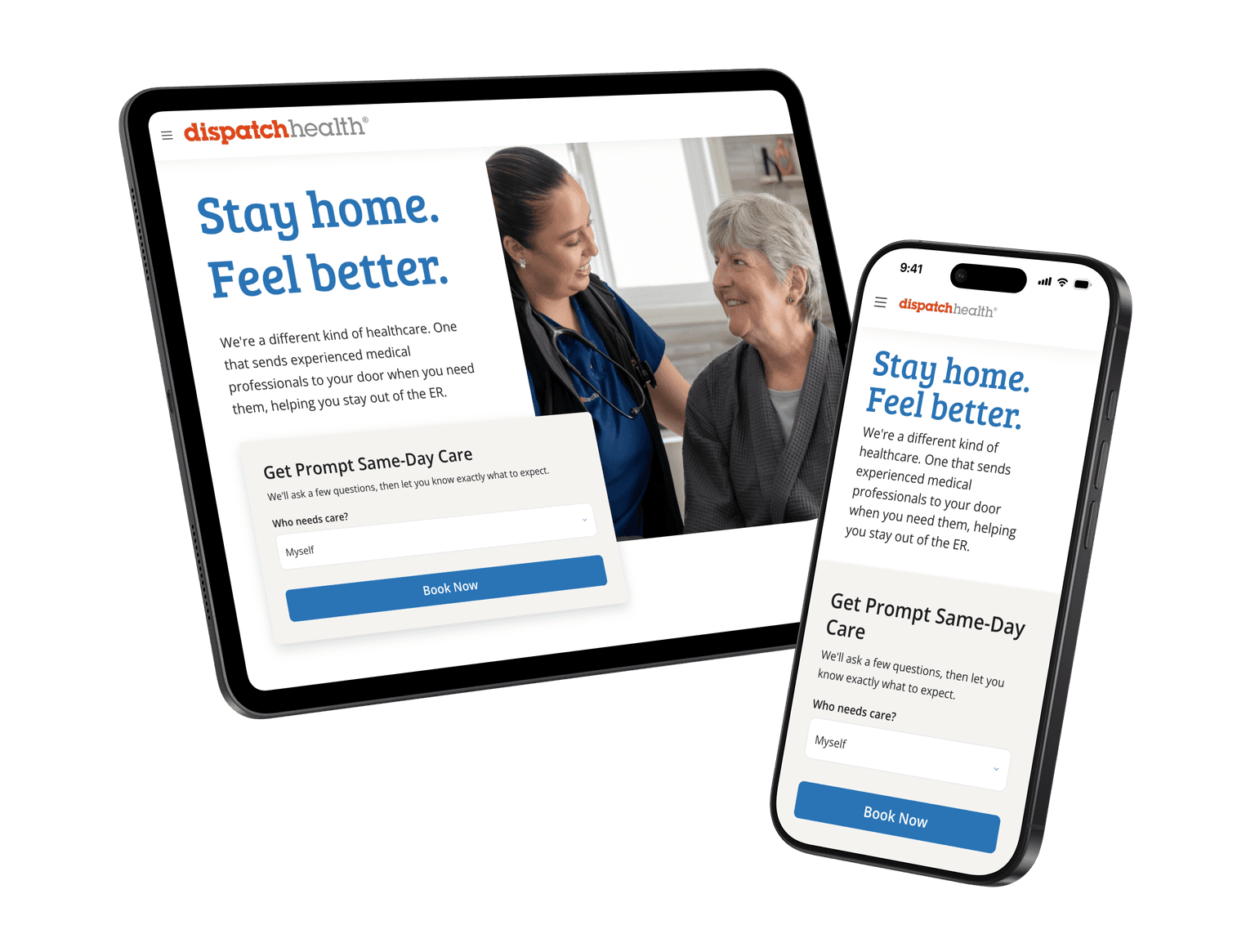
DispatchHealth delivers high-quality, on-demand urgent care directly to patients’ homes, giving patients an alternative to emergency rooms, urgent care clinics, and hospital visits. Their model reduces healthcare costs, increases convenience, and improves patient outcomes by bringing medical teams directly to where patients live.

The Client’s Initial Request
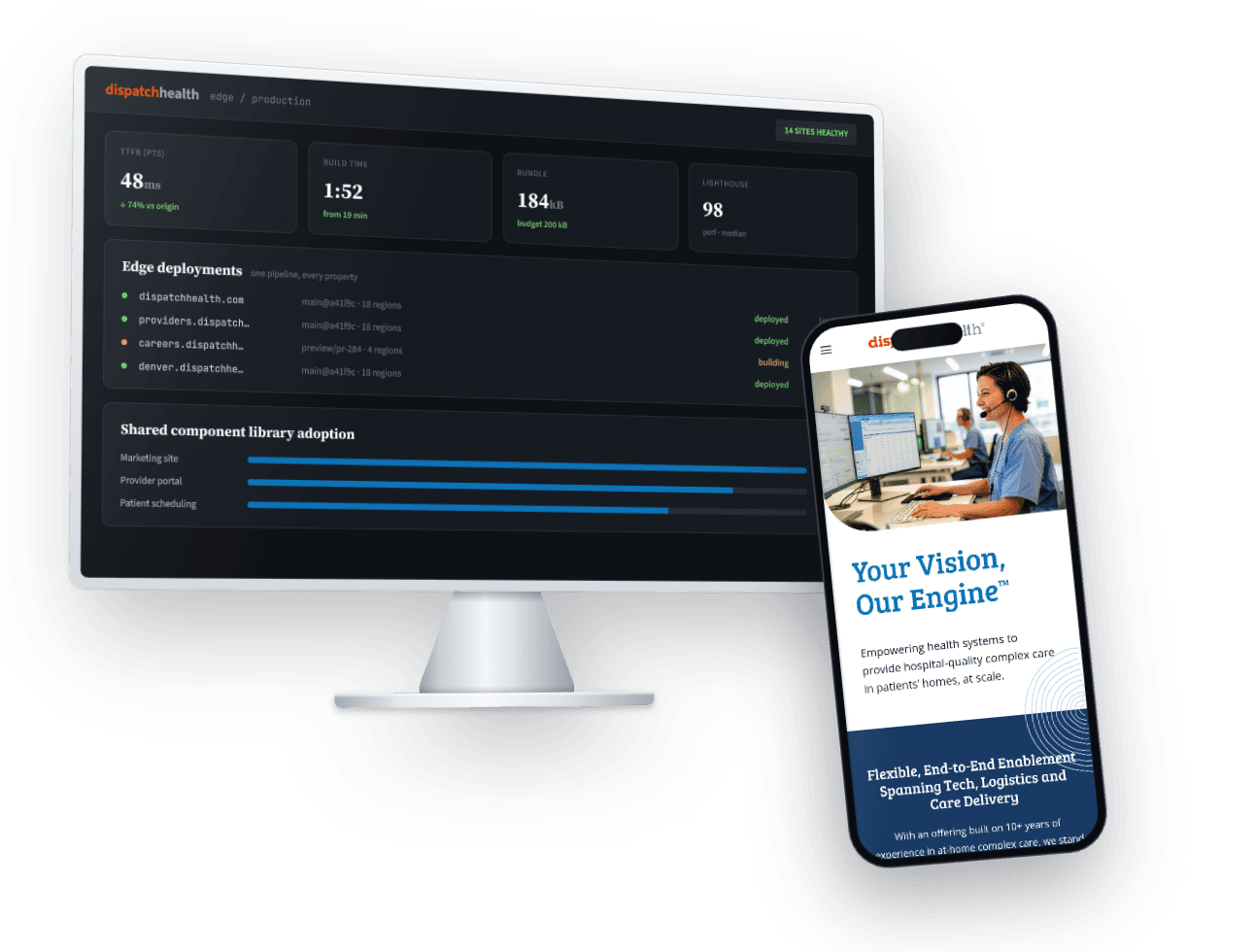
DispatchHealth partnered with DBB Software to redesign its backend architecture and gradually offload high-traffic, high-complexity features from a growing Ruby on Rails monolith into modern Golang microservices.
Decouple High-Load Features from the Monolith
Extract features that could operate independently to reduce dependency on the Ruby codebase.
01
Improve Platform Performance & Scalability
Adopt Golang for its speed, resource efficiency, concurrency model, and straightforward syntax.
02
Enable Long-Term Maintainability
Simplify codebases, reduce legacy overhead, and make individual services easier to evolve.
03
Enhance Cross-Service Communication
Introduce faster, more reliable communication patterns across microservices using gRPC.
04
Support Patient-Facing Features Used Daily
Ensure newly migrated services power patient onboarding, risk evaluation, partner-specific rules, and insurance logic.
05
Solutions We Delivered
DBB Software designed the long-term migration roadmap and helped determine which features should be extracted first based on load, business criticality, and monolith bottlenecks.
Golang Microservice Development & Decoupling from Rails
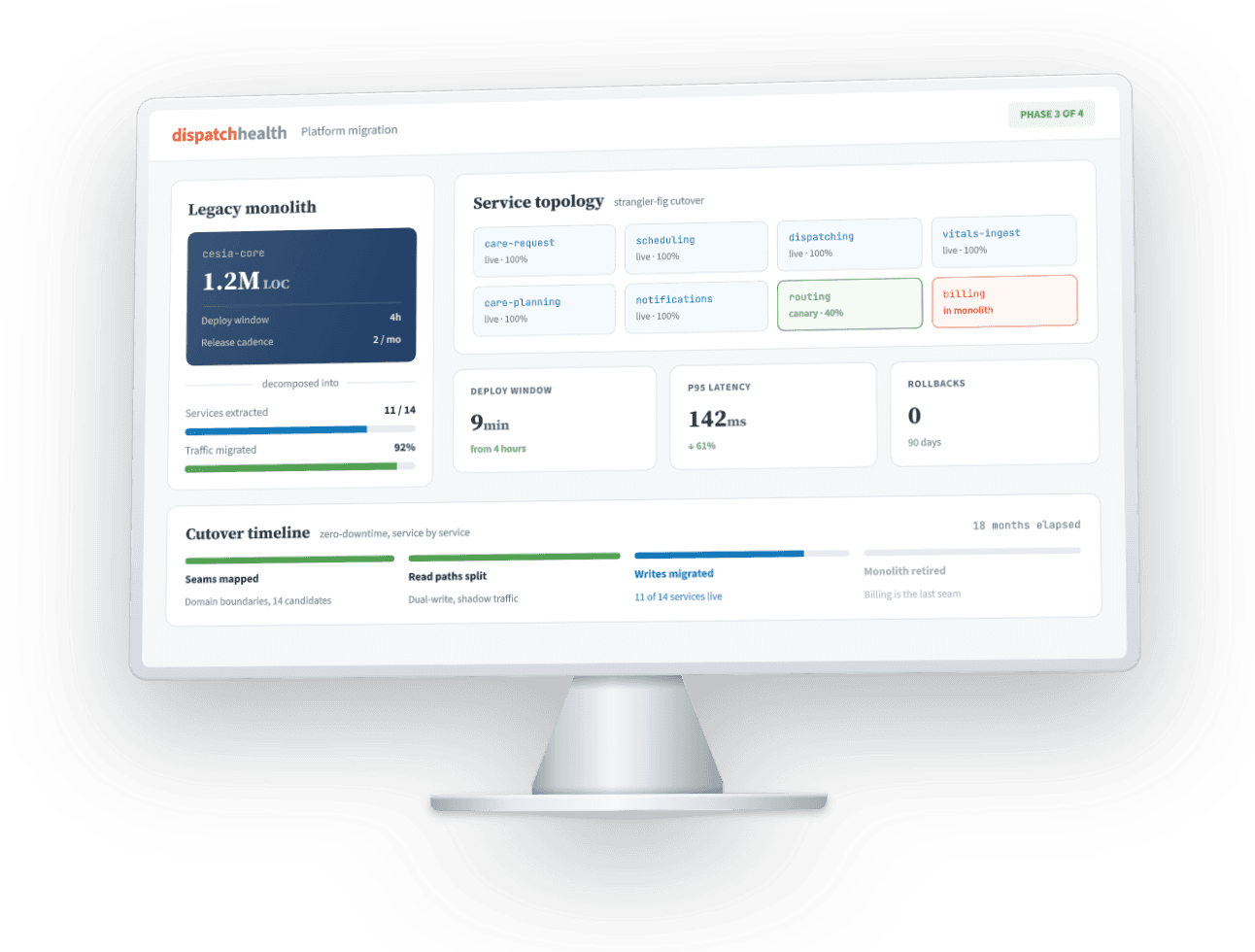
Implemented 17 production microservices to date, handling core functionality such as patient data collection, insurance payers and networks, modalities, risk stratification protocols, and partner separation logic.
High-Performance Communication with gRPC
Introduced gRPC for fast, efficient communication between services to support real-time clinical and operational workflows. This reduced latency and improved the reliability of interactions between patient flows, dispatch logic, and triage systems.
Dedicated Policy Service for Improved Authorization
Developed a standalone authorization service to centralize and streamline access policies across microservices. This removed complex logic from the monolith, increasing system-wide security and clarity.
Operational Stability & Codebase Maintainability
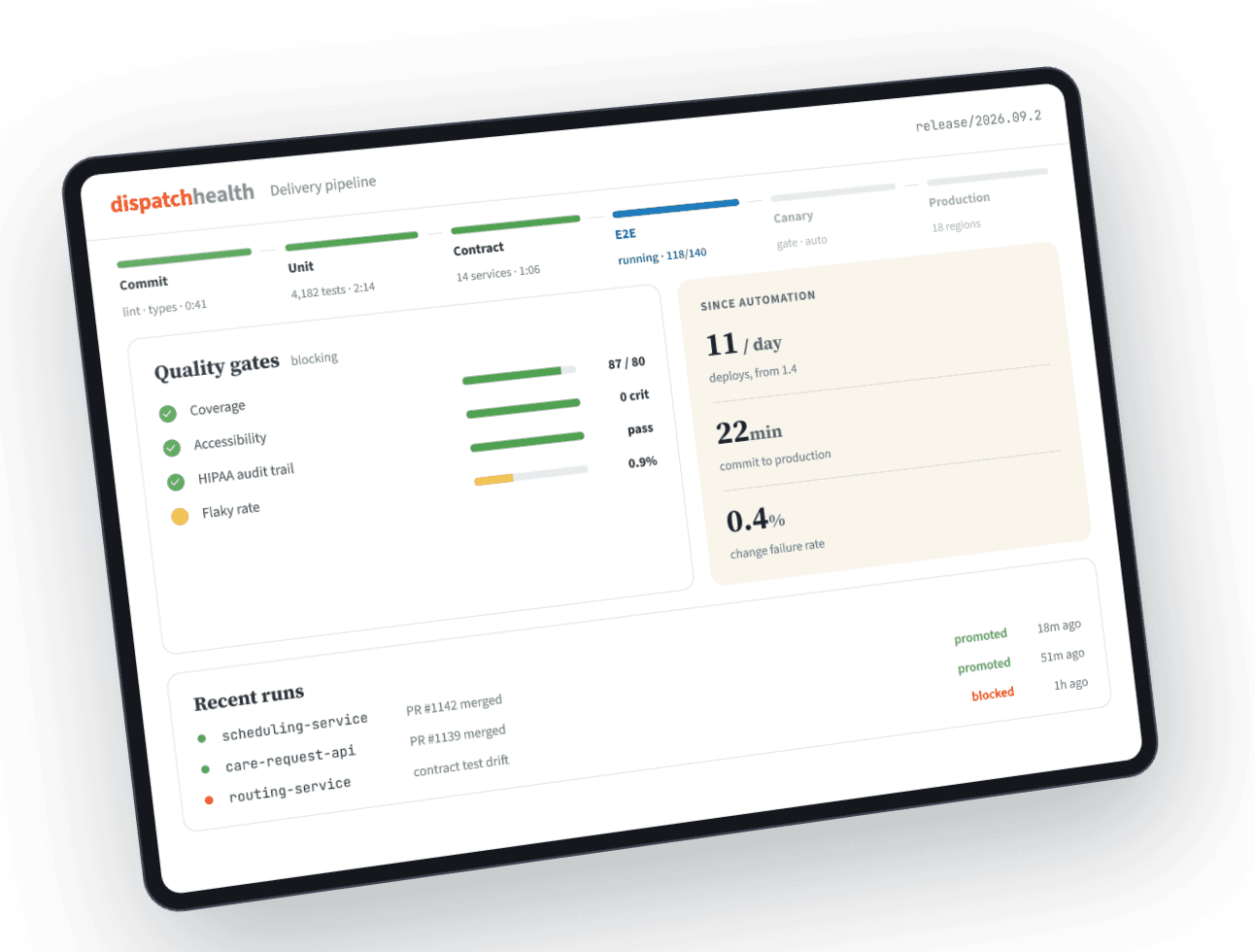
By shifting core functions into Golang, the platform became easier to maintain, with clearer ownership, smaller codebases, and services optimized for their individual responsibilities. The architecture significantly reduced load on the monolith and improved application responsiveness.
Results Achieved

17 Services Migrated
Broke down a monolith, decreasing load and legacy system bottlenecks.

Improved System Performance
Golang’s compiled speed and efficient concurrency model delivered faster execution across critical workflows.

Faster Inter-Service Communication
gRPC improved service-to-service performance, enabling smoother patient and clinical operations.

Stronger Authorization Architecture
A dedicated policy service enhanced clarity, consistency, and security across microservices.

Higher Maintainability
Independent microservices reduced complexity, making the platform easier to evolve and scale over time.
Modernize Legacy Platforms with High-Performance Microservices
We help healthcare and enterprise companies migrate monoliths, improve performance, and build scalable backend architectures.
Contact Us
"Most of our work starts with a 30-minute call where someone describes a product they're trying to ship and one part of the engineering picture they can't get around.
If that's where you are, let's set one up; I'll tell you straight whether we're the right fit.”

Mina Morkos
Business Development Manager


Want a similar outcome for your team?
Ask our AI assistant — it can pull related case studies, talk through the approach, and put you in touch with the team if you want a deeper conversation.