Splitting a SaaS Platform into Independent Serverless Subsystems on GCP
DBB Software redesigned the platform for Tie, splitting it into independently scalable domain-specific subsystems, with an event-driven configuration layer, multi-level caching, and a distributed GCP serverless footprint that replaced an earlier manually run enrichment script.
Industry
Retail & E-Commerce
Service
Web Development
Team
2 Full-Stack Developers
Project State
October 2024 – Ongoing
Country

United States

About the Client
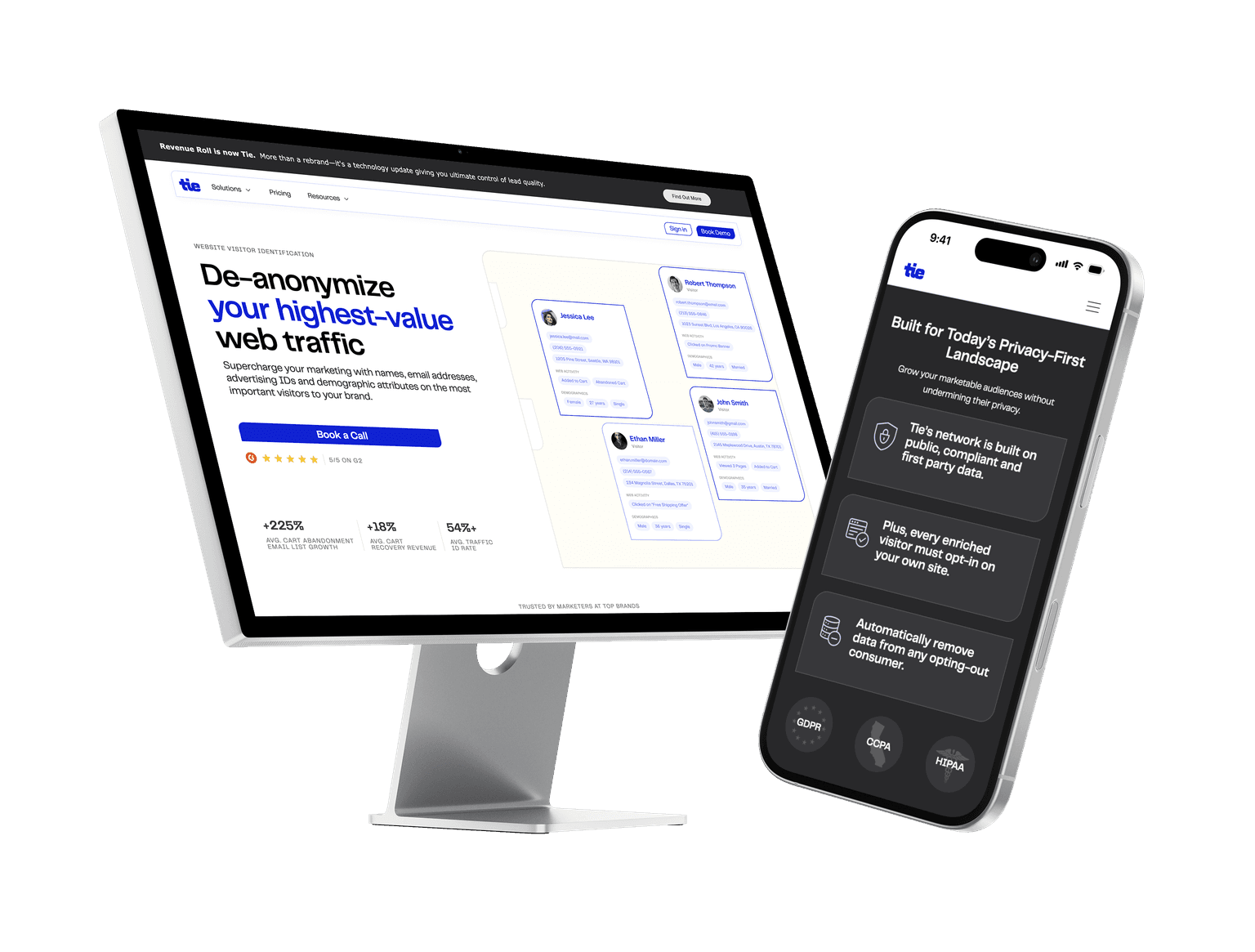
Tie helps creators and e-commerce brands convert their audiences into customers through personalized storefronts, automated recommendations, subscription billing, and no-code configuration tools. The platform combines enriched customer data and creator-to-brand matching to deliver a high-performing commerce experience for both sides.
The Client's Initial Request
Tie approached DBB Software to automate the platform's manual data work and to redesign the architecture around independently scalable serverless subsystems, replacing tightly coupled flows with a configuration-driven, event-based model that keeps cost proportional to load.
Automated Data Enrichment at Scale
Replace the manually run dataset-enrichment script with an automated subsystem that ingests raw data, normalizes it, applies domain-specific rules, and publishes ready-to-consume datasets.
01
Configuration-Driven Data Flow
Build a configuration subsystem integrated into a Kafka-based event stream so platform-behavior changes propagate as events rather than requiring code deploys.
02
Independent Scalability Per Domain
Split the platform into domain-separated serverless subsystems so each scales independently of the others.
03
Serverless-First Cost Profile
Move from a single serverless runtime to a mix of GCP serverless services so each subsystem can scale on the tier best suited to its workload.
04
Isolated Reports and Contracts Services
Stand up separate services for report generation and contract preparation so those workloads don't compete with user-facing request paths.
05
Solutions We Delivered
DBB Software replaced the platform's coupled monolithic flow with independent serverless subsystems on GCP, one per major domain, tied together by a configuration layer.
Domain-Separated Serverless Architecture on GCP
Split the platform into independently deployable serverless subsystems, one per domain. Workloads were redistributed from a single serverless runtime into a mix of GCP services, so each subsystem runs on the tier best suited to its workload and scales independently of the others.
Kafka-Driven Configuration Subsystem
Built a configuration subsystem integrated into a Kafka-based data-providing flow, so configuration changes propagate through the platform as events. Many platform-behavior changes that previously needed a code deploy now ship as configuration updates.
Automated Attributes Enrichment at Scale
Replaced the team's manual dataset mapping work with an automated enrichment subsystem. The pipeline ingests raw data, normalizes it, applies domain-specific enrichment rules, and publishes ready-to-consume datasets without engineering involvement.
Performance and Workload Isolation
Added multi-level caching paired with denormalization on the read path to keep latency low as data volume grows. Reports and contracts run as separate services so their workloads don't compete with user-facing requests, and the engineering team can scale them independently.
Results Achieved

Automated Data Enrichment
A 2-person DBB team replaced the manually-run enrichment script with a subsystem that handles dataset mapping and enrichment end-to-end.

Capacity Tracks Real Load
Subsystems run on the GCP serverless tier, best suited to their workloads, with capacity scaling based on the actual load on each domain.

Domain Isolation Under Traffic Spikes
With each subsystem deployed and scaled independently, a traffic spike in one domain doesn't slow the others down.

Faster Read-Path Latency at Growing Scale
Multi-level caching and denormalization keep read-path latency low as the dataset size grows.
Move Off the Monolith Without a Rebuild
We split tightly coupled platforms into independently scalable serverless subsystems, so your team can iterate on each domain on its own schedule.
Contact Us
"Most of our work starts with a 30-minute call where someone describes a product they're trying to ship and one part of the engineering picture they can't get around.
If that's where you are, let's set one up; I'll tell you straight whether we're the right fit.”

Mina Morkos
Business Development Manager


Want a similar outcome for your team?
Ask our AI assistant — it can pull related case studies, talk through the approach, and put you in touch with the team if you want a deeper conversation.